On this page
Global propionic acid production in 2026 is estimated at 600 to 650 thousand tonnes, reflecting steady expansion rather than rapid volume acceleration. Output growth is closely linked to animal nutrition, food preservation, and selected industrial applications such as agricultural intermediates and cellulose based materials. Capacity additions tend to be incremental, with limited short term flexibility due to capital intensity and qualification requirements.
Cost formation is shaped by feedstock availability, energy consumption, utilities efficiency, and environmental compliance. Petrochemical production routes remain exposed to upstream volatility, while bio based capacity prioritises feedstock stability and sustainability alignment over scale leadership.
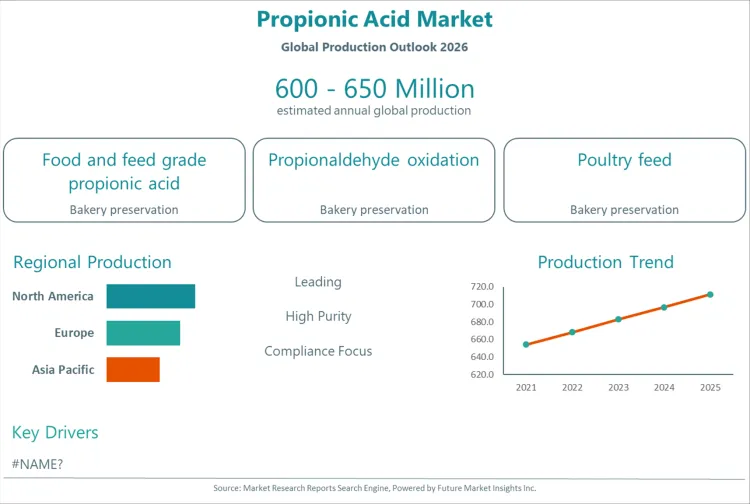
Food and feed grade applications account for the majority of consumption. Buyers focus on purity consistency, regulatory approval, storage stability, and predictable dosing performance across different operating environments.
Petrochemical routes continue to dominate due to scale and established infrastructure. Fermentation based production is developing gradually where sustainability targets, feedstock access, and regulatory incentives support viability.
Animal nutrition provides the most stable consumption base due to continuous feed requirements. Food applications follow population and consumption trends, while industrial and agricultural uses show greater seasonality.
Established capacity supported by large scale animal nutrition and integrated chemical infrastructure.
Balanced supply with strong regulatory oversight and growing interest in renewable production routes.
Gradual capacity expansion driven by feed demand growth and improving processing capability.
Mixed domestic production and imports aligned with livestock sector expansion.
Limited production footprint with reliance on imported material.
The supply chain includes feedstock sourcing, synthesis or fermentation, purification, storage, and distribution to feed manufacturers, food processors, and industrial users. Bulk liquid handling requires strong safety controls and contamination prevention.
Key cost drivers include feedstock pricing, energy use, plant utilisation, and logistics reliability. Propionate salts improve storage flexibility and reduce handling risk for many downstream users.
The ecosystem includes feedstock suppliers, chemical producers, fermentation specialists, feed manufacturers, food processors, distributors, and regulatory authorities. Long term supply relationships and qualification processes are critical due to safety, traceability, and compliance requirements.
Strategic priorities include maintaining cost control, ensuring supply continuity, meeting regulatory standards across regions, and selectively expanding renewable production pathways without disrupting existing supply reliability.
Global production in 2025 is estimated at 600 to 650 thousand tonnes, reflecting steady growth aligned with animal nutrition and food preservation demand.
Cost levels are driven by feedstock pricing, energy consumption, plant scale efficiency, environmental compliance, and logistics reliability.
Animal feed applications require continuous mold control and preservation, creating consistent year round demand with limited substitution risk.
Selection depends on handling safety, storage stability, application method, regulatory preference, and dosing convenience.
Bio based production improves sustainability alignment and feedstock diversification but remains complementary to petrochemical routes due to limited scale.
Explore Hydrocarbons, Petrochemicals, and Organic Chemicals Insights
View Reports
Propionic Acid Global Production Capacity and Growth Outlook

Thank you!
You will receive an email from our Business Development Manager. Please be sure to check your SPAM/JUNK folder too.
