On this page
Global polypropylene filament yarn output in 2026 is estimated at approximately 10 to 15 million tonnes, reflecting a steadily expanding segment supported by lightweighting trends, cost-sensitive textile applications, and rising use in technical fabrics. Supply growth is driven by polypropylene resin availability, investments in high-speed spinning lines, and substitution away from heavier or higher-cost fibres in selected end uses.
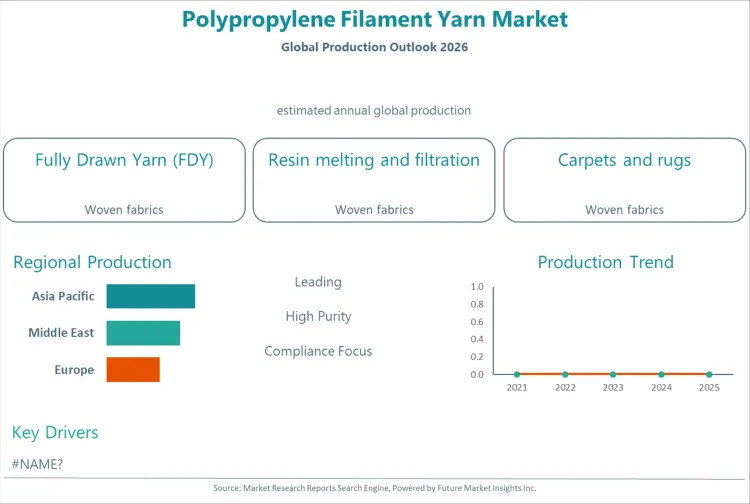
Production remains concentrated in regions with strong polypropylene polymer capacity, integrated fibre manufacturing, and access to downstream textile conversion hubs. Asia Pacific accounts for the majority of global output due to scale advantages, integrated petrochemical infrastructure, and proximity to weaving and knitting clusters. The Middle East supplies competitively priced yarn through feedstock-linked production, while Europe and North America maintain smaller, specialised capacities focused on technical and industrial uses.
Demand growth is supported by applications where durability, chemical resistance, and low density offer performance advantages. Buyers emphasise denier consistency, tensile strength, colour stability, and long-term supply continuity over short-term price movements.
Standard grades dominate volume, while specialised yarns command premiums based on performance specifications rather than appearance. Buyers prioritise denier accuracy, elongation control, and processing stability.
Melt spinning dominates due to polypropylene’s thermoplastic behaviour and cost efficiency. Integrated facilities benefit from lower logistics costs, improved quality control, and reduced exposure to resin supply disruptions.
Technical and furnishing applications dominate volume due to polypropylene’s durability and moisture resistance. Apparel usage remains selective, focused on functional and cost-driven segments.
Asia Pacific leads global output supported by large polypropylene resin capacity, dense textile manufacturing clusters, and export-oriented yarn production.
Middle Eastern producers leverage feedstock-linked polypropylene supply to support competitive filament yarn exports, particularly to Asia and Africa.
European production focuses on specialised and technical yarns, supported by advanced processing capabilities and proximity to industrial textile users.
North America maintains limited but stable capacity, oriented toward industrial, agricultural, and performance textile applications.
The supply chain begins with polypropylene resin production, followed by extrusion, spinning, drawing, texturising, and distribution to fabric converters. Resin cost, energy usage, and plant utilisation rates dominate the cost structure.
Trade flows are shaped by resin-linked production hubs supplying textile conversion regions. Long-term supply relationships are preferred to manage resin volatility and ensure specification consistency.
The polypropylene filament yarn ecosystem includes resin producers, yarn manufacturers, texturising operators, fabric converters, and industrial end users. Supply reliability depends on integration across polymer supply, processing capacity, and downstream demand alignment.
Strategic themes include capacity optimisation, energy efficiency improvements, development of higher-performance yarns, and diversification of end-use exposure.
Global output in 2026 is estimated at approximately 10 to 15 million tonnes, supported by resin availability and growth in technical textile applications.
Pricing is primarily influenced by polypropylene resin costs, energy consumption, plant utilisation, and logistics expenses.
Carpets, furnishings, geotextiles, and industrial fabrics account for the largest share due to durability and cost advantages.
Polypropylene offers lower density and better chemical resistance, while polyester provides higher temperature resistance and broader apparel acceptance.
Buyers favour long-term contracts, diversified sourcing, and specification standardisation to reduce exposure to feedstock and logistics disruptions.
Explore Textiles, Fabrics, Yarn & Fibres Insights
View Reports
Polypropylene Filament Yarn Global Production Capacity and Growth Outlook

Thank you!
You will receive an email from our Business Development Manager. Please be sure to check your SPAM/JUNK folder too.
