On this page

    Methyl Amine Pricing Signals and Production Direction

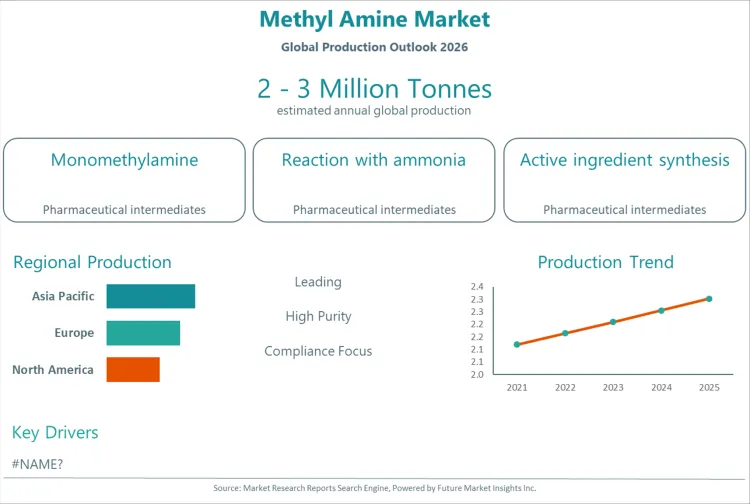
    Global methyl amine production in 2026 is estimated at approximately 2 to 3 million tonnes on a combined mono, di and trimethylamine basis, reflecting its role as a foundational nitrogen intermediate rather than a finished chemical. Output trends closely follow activity in pharmaceuticals, agrochemicals, water treatment chemicals and solvents.

    Production economics are shaped by methanol availability, ammonia sourcing, catalyst performance, reactor selectivity and downstream separation intensity. Cost behavior varies significantly depending on the product mix between monomethylamine, dimethylamine and trimethylamine, since each carries different downstream value and purification requirements.

    The global supply environment shows steady capacity optimisation rather than rapid expansion. Investments focus on improving selectivity control, energy efficiency and separation performance. New capacity additions are typically integrated with downstream derivative production rather than standalone methyl amine units.

    Production capacity is concentrated in regions with strong methanol availability and established amine chemistry infrastructure. Asia Pacific leads global output supported by large scale methanol production and downstream chemical manufacturing. Europe maintains regulated capacity focused on pharmaceutical and specialty applications. North America supports significant production aligned with agrochemical, water treatment and solvent demand. Several regions rely on imports due to limited amination infrastructure.

    Pharmaceutical intermediates, agrochemicals, solvents and water treatment chemicals anchor baseline demand. Buyers prioritise composition control, purity consistency and reliable supply continuity.
    Methyl Amine Market

    Key Questions Answered

    • How sensitive is methyl amine output to methanol and ammonia availability?
    • Which cost components dominate during shifts in product mix?
    • How does selectivity control affect effective capacity utilisation?
    • Where do separation constraints limit operational flexibility?

    Methyl Amine Product Families That Define How Buyers Actually Use It

    Functional Classification

    • Monomethylamine
    • Pharmaceutical intermediates
    • Agrochemical synthesis
    • Water treatment chemicals
    • Dimethylamine
    • Solvents and reagents
    • Rubber chemicals
    • Pharmaceutical synthesis
    • Trimethylamine
    • Choline chloride production
    • Ion exchange resins
    • Specialty chemicals
    • Aqueous and anhydrous forms
    • Solution based handling
    • Pressurised systems
    • Application specific delivery

    Monomethylamine and dimethylamine represent the largest volume share due to broad downstream use. Trimethylamine volumes are smaller but tightly linked to choline and resin production. Buyers differentiate supply based on amine ratio control, moisture content and trace impurity levels.

    Key Questions Answered

    • How tightly must mono, di and tri ratios be controlled for sensitive applications?
    • When do buyers accept mixed amine streams instead of purified cuts?
    • Which applications impose the strictest moisture and impurity limits?

    Methyl Amine Production Routes That Define Cost, Selectivity and Risk

    Process Classification

    • Methanol amination
    • Reaction with ammonia
    • Catalyst driven selectivity
    • Temperature and pressure sensitive
    • Product separation and recovery
    • Distillation and absorption
    • Energy intensive fractionation
    • Purity driven operations
    • Integration with derivatives
    • Captive downstream consumption
    • Reduced logistics exposure
    • Improved system economics

    Methanol amination remains the dominant production route. Managing selectivity toward desired amine products while suppressing by product formation is the central operational challenge. Separation efficiency strongly influences final cost and product slate flexibility.

    Key Questions Answered

    • Where do selectivity losses most commonly occur?
    • How does catalyst aging affect product distribution?
    • How energy intensive is high purity amine separation?
    • At what point does downstream integration outweigh merchant flexibility?

    Methyl Amine End Use Spread Across Key Sectors

    End Use Segmentation

    • Pharmaceuticals and fine chemicals
    • Active ingredient synthesis
    • Intermediates
    • Regulated manufacturing
    • Agrochemicals
      • Herbicide intermediates
      • Crop protection actives
      • Specialty formulations
    • Water treatment and resins
      • Ion exchange resins
      • Flocculants
      • Treatment chemicals
    • Solvents and industrial chemicals
      • Dimethylformamide and dimethylacetamide precursors
      • Rubber chemicals
      • Specialty reagents

    Pharmaceutical and agrochemical uses dominate value contribution due to high specification requirements. Water treatment and solvent applications provide stable volume demand. Buyers focus on purity, consistency and long term availability.

    Methyl Amine Regional Production and Supply Assessment

    Asia Pacific

    Asia Pacific leads global methyl amine production supported by methanol availability and extensive downstream chemical manufacturing.

    Europe

    Europe maintains regulated production focused on pharmaceutical and specialty chemical grades.

    North America

    North America supports integrated production aligned with agrochemical, water treatment and solvent demand.

    Other Regions

    Other regions rely on imports due to limited amination infrastructure and regulatory barriers.

    Key Questions Answered

    • How does methanol feedstock access shape regional production strength?
    • Which regions face the highest dependency on imported high purity amines?
    • How do safety and handling regulations affect regional capacity?

    Methyl Amine Supply Chain, Cost Drivers and Transfer Flows

    The supply chain begins with methanol and ammonia sourcing followed by amination, separation, storage and distribution. Downstream buyers include pharmaceutical producers, agrochemical manufacturers, water treatment companies and solvent producers.

    Key cost drivers include methanol pricing, ammonia availability, energy use, separation intensity and safety compliance. Logistics costs are influenced by whether product is supplied in aqueous or anhydrous form. Transfer flows reflect production concentration in integrated hubs supplying global downstream users.

    Pricing formation reflects product mix, purity level and contract duration rather than short term volatility.

    Key Questions Answered

    • How do methanol price changes translate into delivered amine cost?
    • How does separation efficiency affect net product availability?
    • How do buyers benchmark integrated versus merchant supply?
    • Where does inventory buffering reduce risk versus increase handling exposure?

    Methyl Amine Ecosystem View and Strategic Themes

    The ecosystem includes methanol producers, ammonia suppliers, amination operators, downstream chemical manufacturers and regulators. Production is concentrated among operators with strong process safety and selectivity control capability.

    Equipment suppliers support reactors, distillation systems, absorption units and safety infrastructure. Producers coordinate feedstock sourcing, process optimisation, compliance and long term customer relationships.

    Bibliography

    • European Chemicals Agency. (2024). Methyl amines regulatory overview.
    • Ullmann’s Encyclopedia of Industrial Chemistry. (2024). Alkylamines and industrial synthesis. Wiley-VCH.
    • OECD. (2024). Industrial amination processes and safety practices.

    Frequently Asked Questions

    What is the estimated global methyl amine production volume in 2026?

    Global production in 2026 is estimated at approximately 2 to 3 million tonnes across mono, di and trimethylamine.

    What are the main cost drivers for methyl amine production?

    Costs are driven by methanol and ammonia availability, energy use, separation intensity and safety compliance requirements.

    Why is product mix control critical for methyl amine producers?

    Different downstream applications require specific amine ratios, and deviations can disrupt multiple synthesis pathways.

    How do buyers manage supply continuity risk?

    Buyers rely on qualified suppliers, inventory buffers, and longer term agreements aligned with downstream synthesis cycles.

    Key Questions Answered in the Report

    Supply Chain and Operations

    • How predictable is methyl amine selectivity across operating campaigns?
    • Where do separation bottlenecks most often constrain output?
    • How sensitive is product distribution to catalyst aging?
    • How frequently do safety system constraints limit operating rates?
    • How much buffer inventory is realistic given pressurised handling requirements?
    • How often do maintenance outages reduce effective annual output?
    • How quickly can amination units restart after unplanned shutdowns?
    • How dependent is product consistency on operator experience?
    • Which operational risks increase as assets age?

    Procurement and Raw Materials

    • How diversified are methanol sourcing arrangements?
    • How exposed are operations to ammonia supply disruptions?
    • How flexible are feedstock contracts during force majeure events?
    • Which feedstock impurities most strongly affect selectivity?
    • How do buyers validate upstream safety and compliance practices?
    • Which inputs represent the highest long term sourcing risk?

    Technology and Process Innovation

    • Which catalyst systems improve mono and dimethylamine selectivity?
    • How does advanced process control stabilise product distribution?
    • Where can energy integration reduce operating intensity?
    • How effective are digital tools at predicting off spec amine ratios?
    • Which upgrades most meaningfully extend reactor and separation asset life?
    • How quickly can new selectivity targets be validated commercially?

    Buyer, Channel and Who Buys What

    • Which downstream applications require uninterrupted methyl amine supply?
    • How long does requalification take if amine composition changes?
    • Which users are most exposed to short term supply interruption?
    • Where does substitution with alternative nitrogen intermediates remain feasible?
    • How much inventory do downstream users typically hold?
    • Which applications are actively testing alternative synthesis routes?

    Pricing, Contract and Commercial Model

    • How are mono, di and tri amine differentials structured in contracts?
    • How do agreements address methanol and energy driven cost changes?
    • What mechanisms support recovery of safety and compliance investment?
    • How do buyers and suppliers share outage related risk?
    • Which contract lengths best support downstream synthesis continuity?
    • How do agreements differ between pharmaceutical and industrial uses?

    Plant Assessment and Footprint

    • Which regions remain viable for long term methyl amine production?
    • How do permitting timelines affect future capacity availability?
    • How does site integration influence operational resilience?
    • Which investments most effectively reduce long term safety risk?
    • How suitable are existing assets for selectivity optimisation upgrades?
    • Where does consolidation improve reliability versus reduce redundancy?

    Explore Hydrocarbons, Petrochemicals, and Organic Chemicals Insights

    View Reports

    Trusted By
    Market Research Reports Search Engine

    Methyl Amine Global Production Capacity and Growth Outlook