On this page
Global LNG liquefaction capacity in 2026 is estimated at approximately 400 to 430 million tonnes per annum, reflecting a multi year expansion cycle driven by energy security priorities, power generation demand and industrial fuel switching. Capacity growth is supported by new liquefaction trains, brownfield expansions and floating LNG developments. Industry conditions balance strong long term demand visibility with capital intensity, project execution risk and exposure to upstream gas supply reliability.
Production leadership remains concentrated in regions with abundant natural gas reserves, stable regulatory frameworks and access to shipping infrastructure. North America continues to expand export capacity through modular liquefaction projects linked to shale gas production. The Middle East strengthens its position through large scale integrated developments. Asia Pacific maintains both production and demand leadership through long term supply contracts and portfolio optimisation. Africa adds incremental capacity through new export projects, while Europe remains structurally import dependent.
Power generation, industrial fuel use and heating demand continue to support baseline LNG consumption. Buyers prioritise supply reliability, contract flexibility and price linkage mechanisms aligned with gas indices.
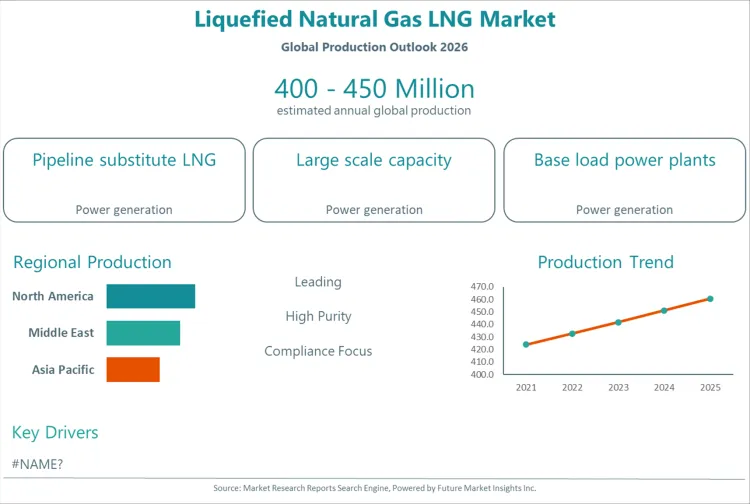
Pipeline substitute LNG dominates volume consumption due to its role in power generation and grid supply. Small scale LNG grows steadily supported by maritime fuel switching and decentralised energy demand.
Liquefaction technology selection determines capital cost, operating efficiency and project timelines. Modular and floating solutions gain traction where speed to output and upstream flexibility are prioritised.
Power generation remains the largest demand segment, supported by coal displacement and grid flexibility needs. Industrial users value LNG for emissions reduction, operational reliability and fuel switching flexibility.
North America leads LNG export growth supported by shale gas availability, flexible contract structures and expanding liquefaction capacity.
The Middle East strengthens long term supply through large scale, low cost integrated projects and long duration contracts.
Asia Pacific anchors global LNG demand with long term procurement strategies supporting power generation and industrial growth.
Africa contributes incremental supply through new export projects monetising offshore gas resources.
Europe remains heavily import reliant, using LNG to diversify supply sources and enhance energy security.
The LNG supply chain spans upstream gas production, liquefaction, shipping, regasification and downstream distribution. Capital intensity, feedgas pricing, shipping availability and terminal access define cost structure.
Trade flows link gas rich regions with demand centres lacking domestic supply. Contract flexibility, destination clauses and indexation mechanisms shape cargo movement. Spot trading continues to grow alongside long term contracts.
Buyers align procurement with portfolio diversification, storage access and demand seasonality.
The LNG ecosystem includes upstream producers, liquefaction operators, shipping companies, terminal operators, utilities, industrial consumers and governments. Export capacity concentrates in gas rich regions, while demand leadership remains in Asia Pacific and Europe.
Strategic themes include contract flexibility, portfolio diversification, emissions management and infrastructure resilience.
Global LNG liquefaction capacity in 2025 is estimated at approximately 400 to 430 million tonnes per annum.
Pricing is primarily influenced by feedgas costs, liquefaction efficiency, shipping rates, terminal fees and contract indexation mechanisms.
New capacity increases supply flexibility but also introduces execution risk and timing uncertainty depending on project completion schedules.
LNG enables diversification of supply sources, flexible delivery routes and seasonal demand balancing.
Buyers use contract diversification, index hedging, portfolio optimisation and storage strategies.
Explore Oil, Gas, and Petrochemicals Insights
View Reports
Liquefied Natural Gas LNG Global Production Capacity and Growth Outlook

Thank you!
You will receive an email from our Business Development Manager. Please be sure to check your SPAM/JUNK folder too.
