On this page

    Propylene Production and Pricing Environment

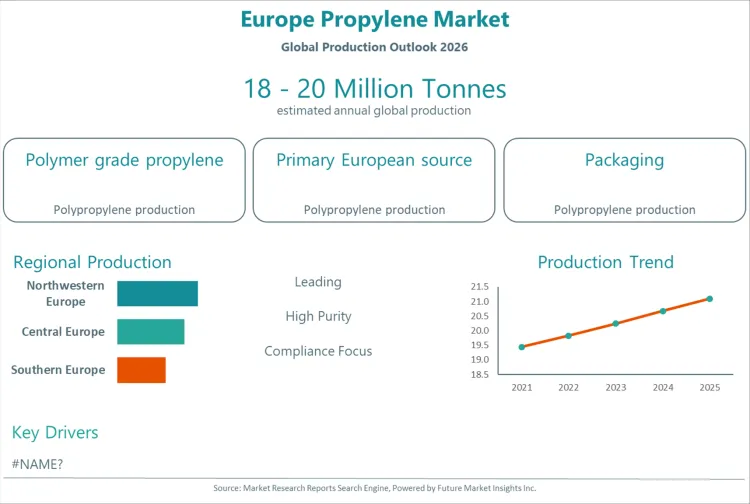
    European propylene production capacity in 2026 is estimated at approximately 18 to 20 million tonnes, reflecting a structurally constrained system dominated by co production rather than standalone assets. Output levels are closely linked to refinery throughput, steam cracker feedstock selection, and operating severity rather than direct propylene focused investment.

    Pricing conditions are influenced by crude oil movements, refinery utilisation, natural gas availability, and competition for olefin streams across polymer and chemical uses. Reduced refinery runs or lighter cracker feed slates limit propylene output, while higher fuel production and heavier feedstocks support incremental volumes. Cost visibility remains sensitive to energy pricing and plant operating stability.

    Production concentration is strongest in Northwestern and Central Europe, anchored by large refinery and petrochemical clusters in Germany, the Benelux region, and France. Southern and Eastern Europe rely more heavily on transfers and imports due to limited local recovery and fewer integrated assets.
    Europe Propylene Market

    Key Questions Answered

    • How dependent is propylene supply on refinery operating rates?
    • How does cracker feedstock selection affect output levels?
    • How do energy costs influence pricing formation?
    • How constrained is capacity growth in Europe?

    Propylene Product Pathways That Define Actual Consumption

    Product Classification

    • Polymer grade propylene
    • Polypropylene production
    • Packaging materials
    • Automotive components
    • Chemical intermediate propylene
    • Propylene oxide
    • Acrylonitrile
    • Cumene and phenol chains
    • Refinery and fuel related uses
    • Alkylation feedstock
    • Blending optimisation
    • Internal refinery balance
    • Specialty and technical applications
      • Elastomers
      • Fibres
      • Performance materials

    Polymer grade consumption dominates European usage due to polypropylene’s role across packaging, automotive, and consumer goods. Chemical intermediates provide steady demand anchored in industrial production. Refinery uses fluctuate with fuel optimisation requirements and regulatory constraints.

    Key Questions Answered

    • How does polypropylene demand influence propylene allocation?
    • How do chemical chains compete for feedstock?
    • How sensitive are volumes to downstream operating rates?
    • How do buyers manage allocation risk?

    Propylene Production Routes That Shape Cost and Control

    Process Classification

    • Refinery fluid catalytic cracking recovery
      • Primary European source
      • Strong linkage to fuel output
      • Limited flexibility
    • Steam cracking co production
      • Dependent on feedstock mix
      • Cyclical operating patterns
      • Shared olefin recovery
    • Propane dehydrogenation
      • On purpose production route
      • Higher capital and energy intensity
      • Improved supply control
    • Integrated recovery and conversion systems
    • On site polymer or chemical units
    • Reduced logistics exposure
    • Margin stabilisation

    Refinery and cracker based recovery dominate supply due to legacy asset structures. Propane dehydrogenation capacity remains limited but increasingly relevant where refiners seek insulation from fuel demand decline. Buyers benefit from suppliers with diversified production routes and integrated downstream conversion.

    Key Questions Answered

    • How viable is propane dehydrogenation under European energy costs?
    • How does refinery severity influence yields?
    • How flexible are integrated production systems?
    • How do producers balance co production priorities?

    Propylene End Use Distribution Across European Industries

    End Use Segmentation

    • Plastics and polymers
      • Packaging
      • Automotive parts
      • Consumer products
    • Chemical manufacturing
      • Oxides and alcohols
      • Synthetic fibres
      • Resins and coatings
    • Refining and energy systems
      • Alkylate production
      • Process optimisation
      • Internal consumption
    • Industrial and specialty uses
      • Elastomers
      • Technical fibres
      • Performance materials

    Plastics remain the primary anchor for propylene consumption due to scale and continuity. Chemical uses provide diversification but remain sensitive to industrial cycles. Refinery uses vary with operational strategy and regulatory treatment of fuel components.

    Key Questions Answered

    • How exposed is demand to packaging and automotive cycles?
    • How do chemical users secure feedstock continuity?
    • How do refiners prioritise internal versus external use?
    • How do specialty applications support value stability?

    European Regional Production Assessment

    Northwestern Europe

    The Benelux region and Western Germany form the core propylene production zone with dense refinery and petrochemical integration.

    Central Europe

    Central Europe supplies domestic polymer and chemical demand with limited surplus for export.

    Southern Europe

    Southern Europe operates fewer large crackers and relies more on imports and internal transfers.

    Eastern Europe

    Eastern Europe shows constrained recovery capacity with rising dependence on external supply for downstream processing.

    Key Questions Answered

    • How does infrastructure density shape supply concentration?
    • How do cross border flows balance regional gaps?
    • How do logistics costs affect delivered pricing?
    • How do national energy policies influence output?

    Propylene Supply Chain, Cost Structure, and Trade Flows

    The propylene supply chain begins with recovery from refineries, crackers, or on purpose units, followed by purification, storage, and distribution via pipelines, ships, or rail. Storage limitations heighten sensitivity to operational disruptions.

    Primary cost drivers include crude oil pricing, energy consumption, hydrogen availability, and purification efficiency. Trade flows within Europe remain active due to uneven geographic distribution of production and consumption. Imports from the Middle East and North America complement supply during periods of tight availability.

    Key Questions Answered

    • How do energy prices translate into propylene costs?
    • How constrained is storage infrastructure?
    • How do logistics options affect supply reliability?
    • How do buyers benchmark domestic versus imported material?

    Propylene Ecosystem View and Strategic Considerations

    The European propylene ecosystem includes refiners, petrochemical producers, polymer manufacturers, chemical converters, and logistics providers. Shared dependence on refinery and cracker operations creates structural interdependence across fuel and materials value chains.

    Strategic considerations include diversification of production routes, protection of critical recovery assets, investment in on purpose capacity, and resilience planning against refinery closures and energy transition pressures.

    Deeper Questions Decision Makers Should Ask

    • How secure are long term refinery operations?
    • How exposed is supply to fuel demand decline?
    • How competitive is propane dehydrogenation in Europe?
    • How flexible are downstream allocation systems?
    • How resilient are logistics and storage assets?
    • How defensible are customer supply agreements?

    Bibliography

    • Eurostat. (2024). Petroleum refining and basic organic chemical production statistics. European Commission.
    • United Nations Conference on Trade and Development. (2024). Trade in olefins and polymer feedstocks. UNCTAD.
    • European Environment Agency. (2024). Industrial emissions, energy use, and refining sector outlook. EEA.
    • International Transport Forum. (2024). Fuel production trends and petrochemical feedstock availability in Europe. OECD.

    Frequently Asked Questions

    What is the estimated European propylene production capacity in 2026?

    European propylene production capacity in 2026 is estimated at approximately 18 to 20 million tonnes.

    What factors most strongly influence propylene pricing?

    Key influences include crude oil pricing, refinery utilisation rates, energy costs, and competition for olefin streams.

    Why is capacity growth constrained in Europe?

    Constraints include reliance on co production assets, high capital requirements for on purpose units, energy intensity, and regulatory complexity.

    How do buyers manage supply risk?

    Buyers diversify sourcing across regions, prioritise integrated suppliers, and secure long term contracts aligned with operating cycles.

    Key Questions Answered in the Report

    Supply chain and operations

    • How predictable are refinery and cracker operating rates?
    • How flexible are recovery and purification systems?
    • How sufficient is buffer storage?
    • How resilient are logistics routes?
    • How quickly can supply adjust to outages?
    • How effective are maintenance practices?
    • How robust are safety systems?
    • How exposed is supply to asset closures?

    Procurement and feedstocks

    • How are internal transfer prices structured?
    • How volatile are energy and feedstock inputs?
    • How diversified are sourcing options?
    • How do buyers manage allocation risk?
    • How are force majeure events handled?
    • How do import options compare on reliability?
    • How is quality verified?
    • How do contracts align with operating cycles?

    Technology and process improvement

    • How efficient are recovery units?
    • How viable is propane dehydrogenation under local energy costs?
    • How do upgrades improve yield stability?
    • How is digital monitoring applied?
    • How are emissions controlled?
    • How do integrations reduce losses?
    • How do partnerships support optimisation?
    • How quickly can plants adapt to demand change?

    Buyer, channel, and who buys what

    • Which sectors anchor baseline demand?
    • How do polymer producers plan volumes?
    • How do chemical users secure continuity?
    • What volumes define long term agreements?
    • How do buyers assess supplier reliability?
    • How do channels differ by region?
    • How do buyers manage substitution options?
    • How do users handle supply interruptions?

    Pricing, contract, and commercial structure

    • What benchmarks guide propylene pricing?
    • How often are prices reviewed?
    • How are energy cost changes passed through?
    • How do contracts differ by derivative use?
    • How long are supply commitments?
    • How are disputes resolved?
    • How are logistics costs allocated?
    • How do suppliers protect margins?

    Plant assessment and footprint

    • Which sites offer secure feedstock access?
    • What defines efficient recovery scale?
    • How do energy costs affect operations?
    • How do environmental rules shape output?
    • How available is skilled labour?
    • How modern are recovery assets?
    • How adaptable are plants to new demand patterns?
    • How suitable are sites for reinvestment?

    Explore Hydrocarbons, Petrochemicals, and Organic Chemicals Insights

    View Reports

    Trusted By
    Market Research Reports Search Engine

    Europe Propylene Production Capacity and Growth Outlook