On this page
European isobutylene production capacity in 2026 is estimated at approximately 2.5 to 3.5 million tonnes, reflecting a structurally constrained supply base largely dependent on co-production from refineries and steam crackers. Output levels are closely tied to fuel production rates, cracker operating severity, and demand for downstream derivatives rather than standalone capacity expansion.
Pricing conditions are influenced by crude oil dynamics, refinery utilisation, and competition for C4 streams among multiple derivative pathways. Periods of reduced refinery throughput or cracker maintenance tighten availability, while higher fuel production supports incremental supply. Producers face limited flexibility due to the absence of large-scale on-purpose isobutylene units in most European locations.
Production concentration remains strongest in Northwestern and Central Europe where integrated refining and petrochemical infrastructure is well established. Germany, the Benelux region, and France anchor supply due to large refinery clusters and chemical integration. Southern and Eastern Europe rely more heavily on imports or internal transfers within multinational producer networks.
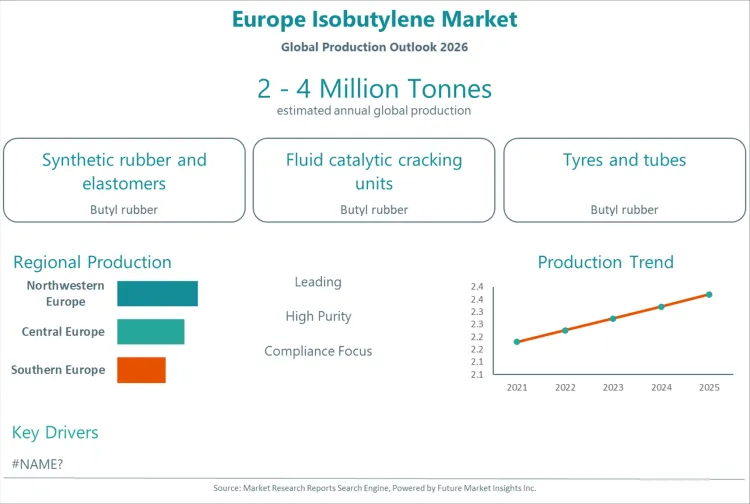
Rubber and elastomer applications dominate European consumption due to established tyre and automotive manufacturing. Fuel related uses fluctuate with regulatory treatment of blending components. Chemical and lubricant applications provide steady baseline demand with higher value per tonne and tighter quality specifications.
Refinery and cracker recovery dominate supply due to existing asset bases. On-purpose dehydrogenation remains limited due to cost, regulatory complexity, and energy intensity. Buyers benefit from integrated producers that align recovery, purification, and downstream conversion within single sites.
Automotive related demand remains the primary anchor due to Europe’s established tyre manufacturing base. Chemical and lubricant uses provide stable demand less exposed to vehicle production cycles. Fuel related consumption varies with regulatory frameworks and refinery economics.
The Benelux region and Western Germany form the core production cluster supported by dense refinery and petrochemical integration.
Central European assets supply both domestic demand and cross-border transfers within producer networks.
Southern Europe operates limited recovery capacity and relies more on imports tied to refinery logistics.
Eastern Europe shows constrained production with growing reliance on imported intermediates for downstream chemical uses.
The isobutylene supply chain begins with refinery or cracker recovery followed by purification, storage, and transfer to downstream users or conversion units. Limited standalone storage capacity increases sensitivity to operational disruptions.
Primary cost drivers include crude oil pricing, refinery operating rates, energy consumption, and purification efficiency. Trade flows within Europe are common due to uneven geographic distribution of production and consumption. Imports from non-European sources remain limited due to logistics complexity and handling requirements.
The European isobutylene ecosystem includes refiners, petrochemical producers, rubber manufacturers, chemical converters, and logistics providers. Coordination across fuel and chemical value chains is essential due to shared feedstock streams.
Strategic considerations include protection of C4 recovery assets, optimisation of downstream integration, regulatory compliance for fuel components, and resilience planning against refinery closures or reduced throughput.
European isobutylene production capacity in 2026 is estimated at approximately 2.5 to 3.5 million tonnes.
Key influences include crude oil pricing, refinery utilisation rates, competition for C4 streams, and energy costs.
Expansion is constrained by high capital requirements, regulatory complexity, energy intensity, and reliance on co-product recovery rather than on-purpose units.
Buyers evaluate supply reliability, proximity, pricing transparency, and the ability of suppliers to manage refinery related disruptions.
Explore Hydrocarbons, Petrochemicals, and Organic Chemicals Insights
View Reports
Europe Isobutylene Production Capacity and Growth Outlook
Thank you!
You will receive an email from our Business Development Manager. Please be sure to check your SPAM/JUNK folder too.
