On this page

    Hydrochloric Acid Production and Pricing Environment

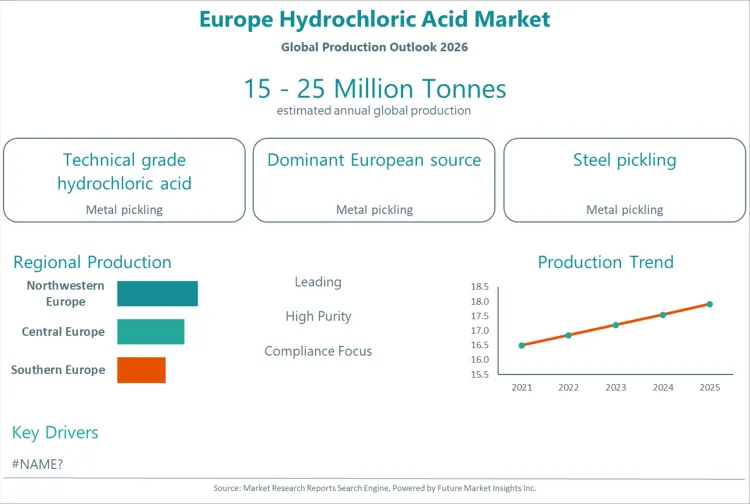
    European hydrochloric acid production capacity in 2026 is estimated at approximately 18 to 21 million tonnes, reflecting a structurally mature system dominated by byproduct generation rather than on purpose synthesis. Output volumes are closely linked to chlorine and vinyl chain operating rates, particularly chlor alkali units, vinyl chloride monomer production, and downstream chlorinated intermediates.

    Pricing conditions are influenced by local supply demand balance, handling and transport constraints, and purity requirements rather than feedstock cost alone. In many locations hydrochloric acid clears at low or negative values at the plant gate, while delivered pricing reflects logistics intensity, storage availability, and neutralisation alternatives. Availability tightens when upstream chlorine units reduce rates or undergo maintenance.

    Production concentration remains highest in Northwestern and Central Europe where chlor alkali capacity and integrated chemical clusters are dense. Germany, France, the Benelux region, and Poland anchor supply. Southern and Eastern Europe rely more heavily on regional transfers due to fewer integrated assets.
    Europe Hydrochloric Acid Market

    Key Questions Answered

    • How dependent is hydrochloric acid availability on chlor alkali operating rates?
    • How do logistics constraints shape delivered pricing?
    • How does purity specification affect usability across sectors?
    • How concentrated is production geographically?

    Hydrochloric Acid Product Grades That Define Actual Use

    Product Classification

    • Technical grade hydrochloric acid
    • Metal pickling
    • pH control and neutralisation
    • Industrial cleaning
    • Industrial process grade hydrochloric acid
    • Chemical synthesis
    • Inorganic salts production
    • Ion exchange regeneration
    • Food and pharmaceutical related grades
    • Food processing aids
    • Active ingredient synthesis
    • Controlled purity applications
    • Specialty and electronic grade hydrochloric acid
    • Semiconductor processing
    • Surface treatment
    • High purity laboratory use

    Technical and industrial grades account for the majority of volumes due to broad applicability and tolerance for variable concentration. High purity grades represent a smaller share but require dedicated handling, traceability, and supplier qualification.

    Key Questions Answered

    • How do buyers differentiate grades by application?
    • How do impurity limits affect downstream processes?
    • How does certification influence procurement decisions?
    • How does concentration variability affect handling?

    Hydrochloric Acid Production Routes That Shape Cost and Control

    Process Classification

    • Chlor alkali byproduct recovery
    • Dominant European source
    • Direct linkage to chlorine output
    • Limited independent control
    • Organic chlorination byproduct streams
    • Vinyl and chlorinated solvents chains
    • Variable purity profiles
    • Site specific integration
    • On purpose synthesis from hydrogen and chlorine
    • Limited deployment
    • Higher cost structure
    • Supply stabilisation role
    • Absorption and concentration systems
    • Tail gas recovery
    • Quality adjustment
    • Logistics optimisation

    Byproduct recovery remains the primary source due to scale and cost efficiency. On purpose synthesis is used selectively to meet quality requirements or stabilise supply where byproduct availability is insufficient. Buyers value producers with absorption flexibility and concentration control.

    Key Questions Answered

    • How sensitive is output to chlorine demand shifts?
    • How controllable is purity from byproduct streams?
    • How viable is on purpose synthesis for security of supply?
    • How does absorption design affect cost?

    Hydrochloric Acid End Use Distribution Across European Industries

    End Use Segmentation

    • Metals and surface treatment
    • Steel pickling
    • Galvanising preparation
    • Metal finishing
    • Chemical manufacturing
    • Inorganic salts
    • Organic intermediates
    • Catalyst regeneration
    • Water and waste treatment
    • pH control
    • Neutralisation
    • Ion exchange systems
    • Electronics and specialty processing
    • Semiconductor fabrication
    • Precision cleaning
    • Laboratory applications

    Metals processing remains the primary volume anchor, while chemical manufacturing provides steady baseline consumption. Electronics and specialty uses require higher purity and tighter delivery control, supporting differentiated supply relationships.

    Key Questions Answered

    • How cyclical is demand from steel and metals processing?
    • How do chemical users manage supply continuity?
    • How do water treatment needs vary regionally?
    • How do specialty users manage quality risk?

    European Regional Production Assessment

    Northwestern Europe

    Germany and the Benelux region form the core production cluster supported by dense chlor alkali and vinyl chain assets.

    Central Europe

    Central Europe supplies domestic industrial demand with limited surplus capacity and strong cross border flows.

    Southern Europe

    Southern Europe operates fewer integrated assets and relies more on delivered supply tied to logistics availability.

    Eastern Europe

    Eastern Europe shows uneven capacity distribution with increasing reliance on regional transfers for consistent supply.

    Key Questions Answered

    • How does chlor alkali concentration affect supply security?
    • How do cross border movements balance regional gaps?
    • How do transport distances affect delivered cost?
    • How do regulatory requirements vary by country?

    Hydrochloric Acid Supply Chain, Cost Structure, and Trade Flows

    The hydrochloric acid supply chain begins with absorption of hydrogen chloride gas followed by storage, dilution or concentration, and distribution via tank trucks, rail, or pipeline. Limited long distance transport feasibility increases dependence on local production.

    Primary cost drivers include absorption efficiency, energy use for concentration, storage infrastructure, and transport distance. Trade flows are regional within Europe, with minimal intercontinental movement due to handling constraints and low unit value at origin.

    Key Questions Answered

    • How does transport radius limit supply options?
    • How constrained is storage capacity?
    • How do energy costs affect concentration economics?
    • How do buyers evaluate local versus remote sourcing?

    Hydrochloric Acid Ecosystem View and Strategic Considerations

    The European hydrochloric acid ecosystem includes chlor alkali producers, vinyl chain operators, metal processors, chemical manufacturers, water treatment operators, and logistics providers. Alignment between chlorine demand and hydrochloric acid offtake remains critical to system stability.

    Strategic considerations include securing long term offtake agreements, investing in storage and absorption flexibility, managing chlorine demand volatility, and maintaining compliance with safety and transport regulations.

    Deeper Questions Decision Makers Should Ask

    • How resilient is supply to chlorine demand swings?
    • How diversified are sourcing options?
    • How adequate is regional storage capacity?
    • How robust are logistics networks?
    • How defensible are long term supply agreements?
    • How adaptable are assets to purity upgrades?

    Bibliography

    • Greenwood, N. N., & Earnshaw, A. (2024). Chemistry of the elements (3rd ed., updated). Elsevier.
    • Perry, R. H., & Green, D. W. (2024). Perry’s chemical engineers’ handbook (9th ed.). McGraw-Hill.
    • Towler, G., & Sinnott, R. (2024). Chemical engineering design: Principles, practice, and economics of plant and process design (3rd ed.). Elsevier.

    Frequently Asked Questions

    What is the estimated European hydrochloric acid production capacity in 2026?

    European hydrochloric acid production capacity in 2026 is estimated at approximately 18 to 21 million tonnes.

    Why is hydrochloric acid often priced very low at the plant gate?

    Because it is primarily a byproduct, pricing reflects disposal avoidance and logistics cost rather than raw material value.

    What factors most strongly influence delivered pricing?

    Transport distance, storage availability, concentration requirements, and handling regulations have the largest impact.

    How do buyers choose between technical and high purity grades?

    Buyers assess impurity tolerance, application sensitivity, certification requirements, and supply reliability.

    Key Questions Answered in the Report

    Supply chain and operations

    • How predictable are chlor alkali operating rates?
    • How flexible are absorption and storage systems?
    • How sufficient is buffer capacity?
    • How resilient are logistics routes?
    • How quickly can supply respond to disruptions?
    • How effective are maintenance practices?
    • How robust are safety systems?
    • How exposed is supply to chlorine demand shifts?

    Procurement and sourcing

    • How are supply contracts structured?
    • How is concentration specified and verified?
    • How diversified are suppliers?
    • How do buyers manage delivery risk?
    • How are compliance audits handled?
    • How do logistics costs vary by region?
    • How are force majeure clauses applied?
    • How do sourcing strategies differ by use case?

    Technology and process improvement

    • How efficient are absorption systems?
    • How controllable is concentration adjustment?
    • How is energy use optimised?
    • How are emissions managed?
    • How do upgrades improve reliability?
    • How is digital monitoring applied?
    • How do safety systems evolve?
    • How do integrations reduce losses?

    Buyer, channel, and who buys what

    • Which sectors anchor baseline demand?
    • How do metal processors plan volumes?
    • How do chemical users secure continuity?
    • What volumes define long term agreements?
    • How do buyers assess supplier reliability?
    • How do delivery models differ by region?
    • How do buyers verify quality consistency?
    • How do users manage emergency supply needs?

    Pricing, contract, and commercial structure

    • What benchmarks guide hydrochloric acid pricing?
    • How often are prices reviewed?
    • How are transport and energy costs passed through?
    • How do contracts differ by grade?
    • How long are supply commitments?
    • How are disputes resolved?
    • How is delivery flexibility priced?
    • How do suppliers protect cost recovery?

    Plant assessment and footprint

    • Which sites offer reliable chlorine integration?
    • What defines efficient absorption scale?
    • How do energy costs affect operations?
    • How do environmental rules shape output?
    • How available is skilled labour?
    • How modern are storage assets?
    • How adaptable are plants to purity change?
    • How suitable are sites for reinvestment?

    Explore Inorganic Chemicals Insights

    View Reports

    Trusted By
    Market Research Reports Search Engine

    Europe Hydrochloric Acid Production Capacity and Growth Outlook