On this page
European ethylene production capacity in 2026 is estimated at approximately 23 to 25 million tonnes, reflecting a mature and energy intensive production base under sustained structural pressure. Output levels depend heavily on steam cracker utilisation, feedstock selection between naphtha, LPG, and ethane, and the economics of operating in a high energy and carbon cost environment.
Pricing conditions are influenced by crude oil trends, natural gas pricing, electricity costs, and carbon compliance obligations. Periods of high energy costs reduce operating rates or accelerate maintenance decisions, tightening availability. Lower energy cost windows support temporary rate increases but do not materially change long term structural constraints.
Production concentration remains strongest in Northwestern Europe, anchored by large integrated petrochemical hubs in Germany, the Benelux region, France, and the United Kingdom. Southern and Eastern Europe operate fewer large crackers and rely more on regional transfers and imports to support downstream polymer and chemical production.
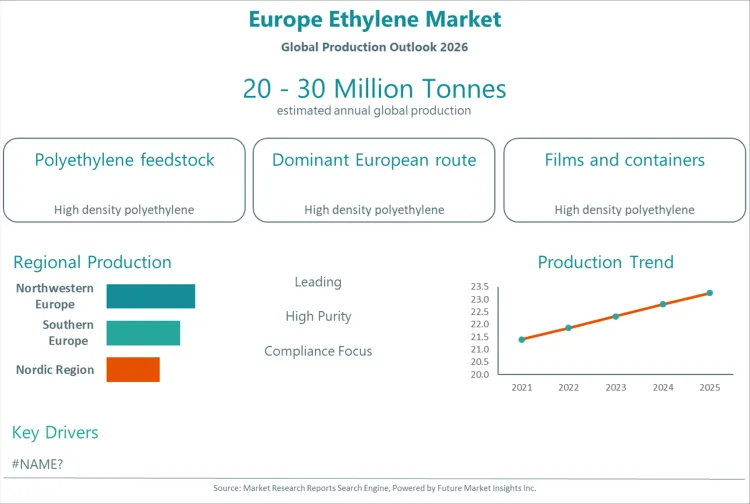
Polyethylene production represents the largest outlet for European ethylene due to scale and continuity of demand. Chemical intermediates provide diversification but remain sensitive to industrial cycles and downstream utilisation rates.
Naphtha cracking continues to dominate due to infrastructure legacy and feedstock availability. Lighter feedstocks offer emissions advantages but remain constrained by supply access. Buyers benefit from producers with feedstock flexibility and integrated downstream conversion.
Packaging remains the primary consumption anchor due to scale and regulatory driven material substitution trends. Construction demand fluctuates with investment cycles, while automotive and industrial uses reflect broader manufacturing activity.
Germany, the Benelux region, France, and the United Kingdom form the core ethylene production cluster with dense steam cracking and polymer integration.
Southern Europe operates fewer large crackers and relies more on imports and interregional transfers.
These regions show limited cracking capacity and depend on supply from Western Europe or external sources.
The Nordic region combines selective cracking assets with strong downstream polymer focus and energy efficiency initiatives.
The ethylene supply chain begins with steam cracking followed by purification, compression, storage, and distribution via pipelines, ships, or derivative conversion. Limited long distance transport capability increases reliance on local integration.
Primary cost drivers include feedstock pricing, energy consumption, carbon compliance costs, and utilisation rates. Trade flows within Europe are limited by infrastructure constraints, while imports of derivatives often substitute for direct ethylene movement during tight supply periods.
The European ethylene ecosystem includes refiners, steam cracker operators, polymer producers, chemical converters, logistics providers, regulators, and energy suppliers. Coordination across energy, feedstock, and downstream value chains is critical for operational viability.
Strategic considerations include managing energy exposure, evaluating electrification investments, optimising feedstock flexibility, and aligning capacity with long term polymer demand under tightening environmental regulation.
European ethylene production capacity in 2026 is estimated at approximately 23 to 25 million tonnes.
Key influences include energy prices, feedstock selection, carbon compliance costs, and steam cracker utilisation rates.
High energy intensity, carbon costs, aging infrastructure, and competition from lower cost regions constrain long term competitiveness.
Buyers prioritise integrated suppliers, diversify sourcing through derivatives, and align contracts with operating cycles and energy exposure.
Explore Hydrocarbons, Petrochemicals, and Organic Chemicals Insights
View Reports
Europe Ethylene Production Capacity and Growth Outlook
Thank you!
You will receive an email from our Business Development Manager. Please be sure to check your SPAM/JUNK folder too.
