On this page

    Diphenylamine Production and Capacity Outlook

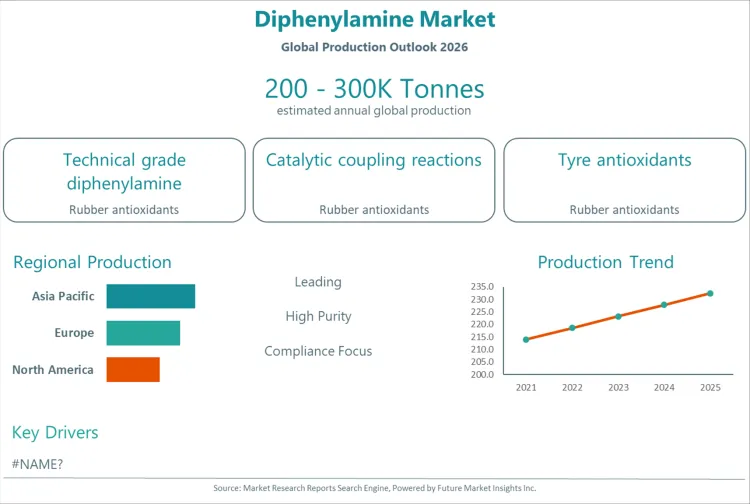
    Global diphenylamine production capacity in 2026 is estimated at approximately 200 to 300 thousand tonnes, reflecting steady but application specific demand growth rather than broad based volume expansion. Capacity trends are driven by requirements in rubber chemicals, antioxidants, lubricants and specialty additives. Most producers focus on debottlenecking, yield optimisation and compliance upgrades instead of new large scale greenfield plants.

    Production remains concentrated in regions with secure aniline supply, established aromatic amine chemistry capability and proximity to downstream rubber and lubricant manufacturing. Asia Pacific leads global capacity due to integrated aniline production and strong tyre manufacturing demand. Europe maintains limited but high compliance capacity focused on specialty and regulated applications. North America supports stable production aligned with lubricant additives and defence related uses. Several regions remain import dependent due to limited aromatic amine synthesis capability.

    Demand stability is supported by recurring use in stabiliser and antioxidant applications. Buyers prioritise purity consistency, impurity control and long term regulatory compliance.
    Diphenylamine Market

    Key Questions Answered

    • How secure is aniline availability for diphenylamine production?
    • How do downstream rubber and lubricant cycles influence demand?
    • How do regulatory pressures affect operating assets?
    • How resilient is diphenylamine demand across industrial cycles?

    Diphenylamine Product Families That Define How Buyers Actually Use It

    Product Classification

    • Technical grade diphenylamine
    • Rubber antioxidants
    • Lubricant additives
    • Industrial stabilisers
    • High purity diphenylamine
    • Specialty chemicals
    • Pharmaceutical and fine chemical uses
    • Defence and electronics applications
    • Derivatised diphenylamine products
    • Antioxidant blends
    • Stabiliser formulations
    • Performance additive packages

    Technical grade material dominates volume consumption due to its role as an intermediate and functional additive. High purity grades serve regulated and performance sensitive applications.

    Key Questions Answered

    • How do buyers specify purity and colour requirements?
    • How do trace impurities affect antioxidant performance?
    • How do formulation requirements influence grade selection?
    • How does regulatory classification affect procurement decisions?

    Diphenylamine Process Routes That Define Cost, Yield and Compliance

    Process Classification

    • Aniline condensation routes
      • Catalytic coupling reactions
      • Temperature and pressure control
      • Yield optimisation focus
    • Hydrogen assisted synthesis pathways
      • Improved selectivity
      • Reduced byproduct formation
      • Energy intensity considerations
    • Integrated aniline based production
      • Feedstock security
      • Reduced logistics exposure
      • Cost predictability
    • Finishing and purification
      • Distillation and crystallisation
      • Colour reduction
      • Specification tightening

    Process selection prioritises control of byproducts and colour due to performance sensitivity in downstream applications.

    Key Questions Answered

    • How sensitive diphenylamine cost is to aniline pricing?
    • How do process controls influence colour and purity?
    • How do waste and emissions requirements affect economics?
    • How does integration reduce operational risk?

    Diphenylamine End Use Spread Across Key Sectors

    End Use Segmentation

    • Rubber and elastomers
      • Tyre antioxidants
      • Rubber stabilisers
      • Processing protection
    • Lubricants and fuels
      • Oxidation inhibitors
      • Engine oil additives
      • Industrial lubricants
    • Explosives and propellants
      • Stabilising agents
      • Defence related applications
      • Controlled industrial use
    • Specialty chemicals
      • Polymer stabilisers
      • Fine chemical intermediates
      • Performance additives

    Rubber and lubricant applications account for the majority of consumption. Defence and specialty uses contribute smaller but higher value volumes.

    Key Questions Answered

    • How does tyre production influence diphenylamine demand?
    • How do lubricant formulators evaluate antioxidant efficiency?
    • How do defence applications affect regulatory oversight?
    • How do specialty users manage supply continuity?

    Diphenylamine Regional Production Potential Assessment

    Asia Pacific

    Asia Pacific leads global production supported by integrated aniline capacity and strong tyre and rubber manufacturing activity.

    Europe

    Europe focuses on specialty and compliant production with limited capacity expansion.

    North America

    North America maintains stable output aligned with lubricant additives and regulated industrial uses.

    Latin America

    Latin America remains largely import dependent with consumption linked to tyre manufacturing and mining explosives.

    Middle East and Africa

    Production is minimal, with supply met through imports for industrial applications.

    Key Questions Answered

    • How do regional feedstock economics affect competitiveness?
    • How do import dependent regions manage supply risk?
    • How do regulations differ across regions?
    • How do logistics affect regional availability?

    Diphenylamine Supply Chain, Cost Drivers and Trade Patterns

    The diphenylamine supply chain begins with aniline sourcing followed by synthesis, purification and distribution to rubber, lubricant and specialty chemical producers. Handling and storage require adherence to safety and quality standards due to aromatic amine classification.

    Key cost drivers include aniline pricing, energy use, purification intensity and compliance requirements. Trade flows connect Asian production hubs with global rubber and lubricant manufacturing centres.

    Contracts emphasise specification stability, regulatory documentation and continuity of supply.

    Key Questions Answered

    • How do feedstock costs translate into diphenylamine pricing?
    • How do logistics and storage requirements affect delivered cost?
    • How do buyers benchmark compliant suppliers?
    • How do safety requirements shape trade patterns?

    Diphenylamine Ecosystem View and Strategic Themes

    The ecosystem includes aniline producers, diphenylamine manufacturers, rubber chemical companies, lubricant additive formulators, defence users and regulators. Supply concentration reflects technical and regulatory barriers associated with aromatic amine chemistry.

    Strategic themes include feedstock integration, compliance driven portfolio management, gradual substitution pressure in certain applications and focus on consistent quality delivery.

    Deeper Questions Decision Makers Should Ask

    • How secure is long term aniline sourcing?
    • How exposed are assets to regulatory tightening?
    • How diversified are downstream application portfolios?
    • How scalable are compliant production assets?
    • How resilient is demand to substitution risk?
    • How robust are safety and quality systems?
    • How transparent are compliance and audit processes?
    • How aligned are suppliers and customers on risk management?

    Bibliography

    • USA Environmental Protection Agency. (2023). Aromatic amines: Industrial use patterns, hazard profiles, and regulatory controls. USA EPA.
    • European Commission Joint Research Centre. (2023). Best available techniques (BAT) for organic and fine chemicals production. Publications Office of the European Union.
    • International Organization for Standardization. (2023). Quality, safety, and environmental management systems for specialty chemical manufacturing. ISO Standards Publications.

    Frequently Asked Questions

    What is the estimated global diphenylamine production volume in 2025?

    Global diphenylamine production in 2025 is estimated at approximately 200 to 300 thousand tonnes, supported by rubber antioxidants and lubricant additive demand.

    What are the biggest cost drivers shaping diphenylamine pricing?

    Pricing is driven by aniline feedstock costs, energy use, purification requirements and regulatory compliance expenses.

    How do regulations affect diphenylamine availability?

    Safety and environmental regulations limit new capacity development and increase compliance costs, particularly in Europe.

    Why is diphenylamine important in rubber and lubricants?

    Diphenylamine acts as an effective antioxidant, extending service life and performance under heat and oxidative stress.

    Which sectors drive future diphenylamine demand?

    Tyre manufacturing, industrial lubricants and specialty stabiliser applications remain the primary demand drivers.

    Key Questions Answered in the Report

    Supply chain and operations

    • How predictable is aniline feedstock supply?
    • How stable is plant utilisation?
    • How effective are colour and purity controls?
    • How resilient are logistics and storage systems?
    • How quickly can output adjust to demand shifts?
    • How are hazardous material risks managed?
    • How robust are quality assurance systems?
    • How are operational disruptions handled?

    Procurement and raw material

    • How is aniline indexed in contracts?
    • How do suppliers ensure batch consistency?
    • How is price volatility managed?
    • What contract duration supports continuity?
    • How are alternative suppliers qualified?
    • How do buyers manage supply disruption risk?
    • How are audits conducted?
    • How do onboarding requirements vary by region?

    Technology and innovation

    • How do synthesis improvements reduce byproducts?
    • How do purification upgrades improve colour stability?
    • How are emissions reduced in production?
    • How does digital monitoring improve consistency?
    • How do producers manage scale up risk?
    • How are safer handling systems implemented?
    • How do partnerships support formulation innovation?
    • How does innovation support compliance goals?

    Buyer, channel and who buys what

    • Which sectors sustain diphenylamine demand?
    • How do buyers qualify compliant supply?
    • What volumes define standard agreements?
    • How do buyers balance cost and performance?
    • How do channels influence delivered cost?
    • How do buyers verify regulatory documentation?
    • How do users manage operational risk?
    • How do specifications vary by application?

    Pricing, contract and commercial model

    • What reference points guide diphenylamine pricing?
    • How frequently are pricing reviews conducted?
    • How do contracts ensure supply continuity?
    • How do buyers compare regional cost structures?
    • What duration supports asset utilisation?
    • How are disputes resolved?
    • How do compliance costs affect pricing terms?
    • How do contracts vary by end use?

    Plant assessment and footprint

    • Which regions offer reliable aniline access?
    • What investment defines competitive scale?
    • How do permitting requirements affect operations?
    • How suitable are aromatic chemical clusters?
    • How consistent are regulatory conditions?
    • How are safety and environmental audits managed?
    • How does workforce skill availability affect quality?
    • How do transport links support downstream customers?

    Explore Specialty Chemicals Insights

    View Reports

    Trusted By
    Market Research Reports Search Engine

    Diphenylamine Global Production Capacity and Growth Outlook