On this page

    Detergent Alcohol Pricing Signals and Production Direction

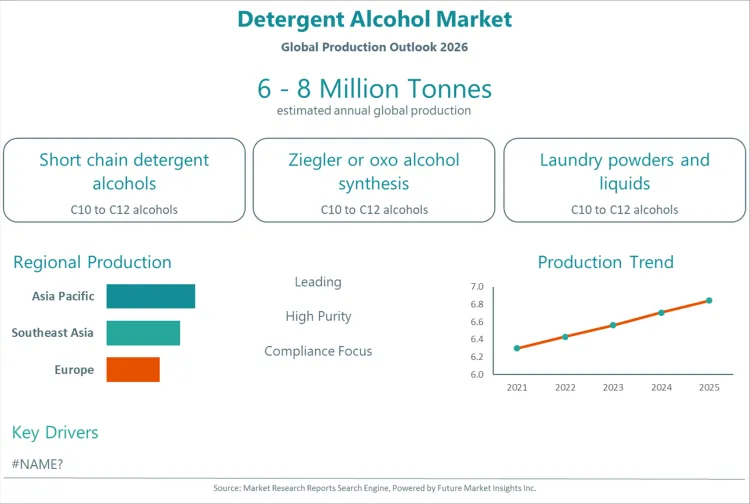
    Global detergent alcohol production in 2026 is estimated at approximately 6 to 8 million tonnes, reflecting its role as a core intermediate for anionic and nonionic surfactants rather than a finished formulation ingredient. Output trends closely follow detergent, cleaning product, institutional hygiene and industrial surfactant consumption.

    Production economics are shaped by feedstock route selection, particularly between petrochemical based linear alpha olefin routes and natural oil based fatty alcohol routes. Cost behavior varies materially depending on carbon chain length distribution, degree of linearity, hydrogenation efficiency and energy use. Producers increasingly manage portfolios across both routes to balance feedstock volatility and downstream specification requirements.

    The global supply environment shows steady capacity optimisation rather than aggressive expansion. Investments are directed toward debottlenecking, chain length flexibility, hydrogen efficiency and emissions reduction. New capacity development is closely tied to downstream surfactant integration rather than standalone alcohol production.

    Production capacity is concentrated in regions with strong petrochemical integration or access to natural oils. Asia Pacific leads global output supported by large scale petrochemical assets and growing detergent consumption. Southeast Asia plays a key role in natural alcohol supply due to palm and coconut oil availability. Europe maintains diversified capacity focused on performance grades and regulated applications. North America supports integrated production aligned with household and industrial cleaning demand. Several regions rely on imports due to limited feedstock availability.

    Household detergents, institutional cleaners, industrial surfactants and personal care products anchor baseline demand. Buyers prioritise chain length consistency, low impurity levels and reliable supply continuity.
    Detergent Alcohol Market

    Key Questions Answered

    • How sensitive is detergent alcohol output to petrochemical versus natural feedstock availability?
    • Which cost components dominate during periods of feedstock volatility?
    • How does carbon chain distribution affect downstream surfactant performance?
    • Where do operational constraints limit grade flexibility?

    Detergent Alcohol Product Families That Define How Buyers Actually Use It

    Functional Classification

    • Short chain detergent alcohols
    • C10 to C12 alcohols
    • Light duty detergents
    • Industrial cleaners
    • Medium chain detergent alcohols
    • C12 to C14 alcohols
    • Household laundry detergents
    • Dishwashing formulations
    • Long chain detergent alcohols
      • C14 to C18 alcohols
      • Fabric softeners
      • Specialty surfactants
    • Natural and petrochemical origin grades
      • Oleochemical based alcohols
      • Synthetic linear alcohols
      • Blended chain distributions

    Medium chain alcohols represent the largest volume due to widespread use in household detergents. Long chain alcohols serve more specialised applications with different solubility and foaming profiles. Buyers differentiate supply based on chain length precision, odor, unsaturation level and trace impurities.

    Key Questions Answered

    • How tight must chain length distributions be for premium detergent formulations?
    • When do buyers accept blended alcohol streams instead of narrow cuts?
    • Which applications are most sensitive to odor and color variation?

    Detergent Alcohol Production Routes That Define Cost, Flexibility and Risk

    Process Classification

    • Petrochemical routes
      • Ziegler or oxo alcohol synthesis
      • Ethylene based feedstocks
      • High hydrogen consumption
    • Oleochemical routes
      • Fatty acid methyl ester hydrogenation
      • Natural oil feedstocks
      • Carbon footprint considerations
    • Fractionation and finishing
      • Chain length separation
      • Distillation and polishing
      • Blending for specification control

    Petrochemical routes offer high consistency and scalability, while oleochemical routes provide renewable sourcing but greater feedstock variability. Fractionation efficiency and hydrogen availability play critical roles in cost and operational stability.

    Key Questions Answered

    • Where do yield losses most commonly occur across routes?
    • How does hydrogen availability constrain operating rates?
    • How energy intensive is narrow cut fractionation?
    • At what point does blending replace separation as the preferred approach?

    Detergent Alcohol End Use Spread Across Key Sectors

    End Use Segmentation

    • Household detergents
      • Laundry powders and liquids
      • Dishwashing formulations
      • Surface cleaners
    • Institutional and industrial cleaning
      • Food service hygiene
      • Industrial degreasers
      • Hard surface cleaners
    • Personal care and cosmetics
      • Shampoos and body washes
      • Liquid soaps
      • Specialty cleansing systems
    • Industrial surfactants
      • Emulsifiers
      • Wetting agents
      • Process aids

    Household and institutional cleaning applications dominate volume consumption due to continuous demand. Personal care uses impose higher purity and sensory requirements. Buyers focus on formulation stability, regulatory compliance and long term availability.

    Detergent Alcohol Regional Production and Supply Assessment

    Asia Pacific

    Asia Pacific leads global production supported by petrochemical integration and growing detergent consumption.

    Southeast Asia

    Southeast Asia plays a central role in natural alcohol supply due to access to palm and coconut oil feedstocks.

    Europe

    Europe maintains diversified production focused on performance grades and regulated applications.

    North America

    North America supports integrated production aligned with household, institutional and industrial cleaning demand.

    Other Regions

    Other regions rely on imports due to limited feedstock availability and processing infrastructure.

    Key Questions Answered

    • How does feedstock access shape regional production strength?
    • Which regions face the highest dependency on imports?
    • How do sustainability and sourcing regulations influence route selection?

    Detergent Alcohol Supply Chain, Cost Drivers and Transfer Flows

    The supply chain begins with petrochemical feedstocks or natural oils followed by synthesis, hydrogenation, fractionation, storage and distribution. Downstream buyers include surfactant producers, detergent formulators and personal care manufacturers.

    Key cost drivers include feedstock availability, hydrogen consumption, energy use, fractionation intensity and compliance requirements. Logistics costs vary by region and origin route. Transfer flows reflect production concentration in integrated hubs supplying global formulation centers.

    Pricing formation reflects chain length precision, origin route and contract duration rather than short term volatility.

    Key Questions Answered

    • How do feedstock disruptions translate into delivered alcohol availability?
    • How does fractionation efficiency affect cost competitiveness?
    • How do buyers benchmark petrochemical versus natural origin alcohols?
    • Where does inventory buffering reduce risk versus increase working capital pressure?

    Detergent Alcohol Ecosystem View and Strategic Themes

    The ecosystem includes petrochemical producers, oleochemical processors, hydrogen suppliers, surfactant manufacturers, detergent formulators and regulators. Production is concentrated among operators with strong integration and feedstock access.

    Equipment suppliers support reactors, hydrogenation units, distillation columns and blending systems. Producers coordinate feedstock sourcing, operational optimisation, sustainability compliance and long term customer relationships.

    Bibliography

    • CESIO - International Association for Soaps, Detergents and Maintenance Products. (2024). Surfactant raw materials and formulation performance requirements. CESIO.
    • American Cleaning Institute. (2024). Surfactant feedstocks and detergent formulation stability. ACI.
    • International Organization for Standardization. (2024). Quality management and impurity control for surfactant raw materials. ISO.

    Frequently Asked Questions

    What is the estimated global detergent alcohol production volume in 2026?

    Global production in 2026 is estimated at approximately 6 to 8 million tonnes, driven by detergent, cleaning and surfactant demand.

    What are the main cost drivers for detergent alcohol production?

    Costs are driven by feedstock availability, hydrogen consumption, energy use, fractionation intensity and compliance requirements.

    Why is chain length distribution critical for detergent alcohols?

    Chain length affects solubility, foaming behavior, detergency and formulation performance.

    How do buyers manage supply continuity risk?

    Buyers rely on qualified suppliers, formulation flexibility, inventory buffers and longer term agreements.

    Key Questions Answered in the Report

    Supply Chain and Operationst

    • How predictable are detergent alcohol yields across different feedstock routes?
    • Where do fractionation bottlenecks most often constrain output?
    • How sensitive is chain length distribution to feedstock variability?
    • How frequently do hydrogen supply limits affect operating rates?
    • How much buffer inventory is realistic given storage and oxidation risks?
    • How often do maintenance outages reduce effective annual output?
    • How quickly can production switch between chain length cuts?
    • How dependent is quality consistency on operator expertise?
    • Which operational risks increase as assets age?

    Procurement and Raw Materials

    • How diversified are petrochemical and natural oil sourcing arrangements?
    • How exposed are operations to palm and coconut oil supply disruptions?
    • How flexible are hydrogen supply contracts during force majeure events?
    • Which feedstock impurities most strongly affect product odor and color?
    • How do buyers validate upstream sustainability and compliance practices?
    • Which inputs represent the highest long term sourcing risk?

    Technology and Process Innovation

    • Which hydrogenation technologies improve yield and energy efficiency?
    • How does advanced control improve chain length consistency?
    • Where can heat integration reduce operating intensity?
    • How effective are digital tools at predicting off spec alcohol cuts?
    • Which upgrades most meaningfully extend fractionation asset life?
    • How quickly can new chain distributions be validated for customers?

    Buyer, Channel and Who Buys What

    • Which detergent formulations require uninterrupted alcohol supply?
    • How long does reformulation take if alcohol specifications change?
    • Which users are most exposed to short term supply interruption?
    • Where does substitution with alternative surfactant feedstocks remain feasible?
    • How much inventory do formulators typically hold?
    • Which applications are actively testing alternative raw materials?

    Pricing, Contract and Commercial Model

    • How are chain length and origin premiums structured?
    • How do contracts address feedstock and hydrogen driven cost changes?
    • What mechanisms support recovery of sustainability investment?
    • How do buyers and suppliers share outage related risk?
    • Which contract lengths best support formulation stability?
    • How do agreements differ between household and industrial cleaning uses?

    Plant Assessment and Footprin

    • Which regions remain viable for long term detergent alcohol production?
    • How do permitting timelines affect future capacity availability?
    • How does site integration influence operational resilience?
    • Which investments most effectively reduce long term compliance risk?
    • How suitable are existing assets for chain length flexibility upgrades?
    • Where does consolidation improve reliability versus reduce redundancy?

    Explore Functional Agents & Additives Insights

    View Reports

    Trusted By
    Market Research Reports Search Engine

    Detergent Alcohol Global Production Capacity and Growth Outlook