On this page

    How n-butanol production and pricing are developing across Asia Pacific

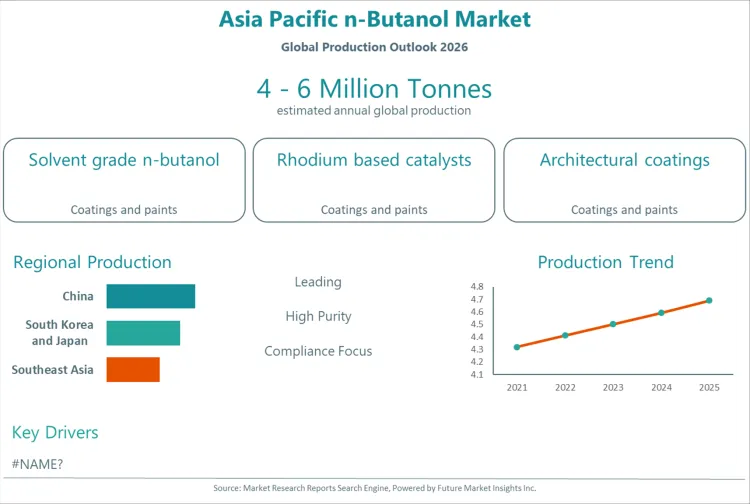
    Asia Pacific n-butanol production in 2026 is estimated at approximately 4 to 6 million tonnes, positioning the region as the largest global supply base. Output growth reflects steady expansion in coatings, adhesives, plasticisers and acrylates rather than short cycle demand swings. n-Butanol remains a core oxo alcohol due to its solvent strength, reactivity and role as an intermediate for higher value derivatives.

    Production economics are closely linked to propylene availability, oxo synthesis efficiency and energy costs. Pricing behaviour across Asia Pacific varies by country depending on feedstock sourcing, refinery integration and import exposure. Integrated producers benefit from cost stability, while import dependent markets experience higher volatility linked to freight and currency movements.

    China leads regional capacity through large scale petrochemical complexes and strong downstream demand. South Korea and Japan maintain mature but technologically advanced capacity aligned with specialty chemicals. Southeast Asia expands production to support coatings and construction growth. India increases capacity to reduce imports and support infrastructure and manufacturing expansion.

    Buyers prioritise consistent purity, predictable supply and alignment with downstream derivative availability.
    Asia Pacific N Butanol Market

    Key Questions Answered

    • How scalable is nbutanol capacity given propylene constraints?
    • How do oxo process economics affect pricing stability?
    • How does regional demand growth influence operating rates?
    • How do logistics and trade exposure affect supply continuity?

    How n-butanol product families define how buyers actually use it

    Product Classification

    • Solvent grade nbutanol
      • Coatings and paints
      • Industrial cleaners
    • Chemical intermediate grade nbutanol
      • Butyl acrylate
      • Glycol ethers
    • Plasticiser feedstock grade
      • Butyl acetate
      • Butyl phthalates and alternatives
    • High purity and specialty grades
      • Electronics and inks
      • Regulated applications

    Solvent and intermediate grades represent the majority of regional volume due to broad use in coatings and derivatives. High purity grades serve smaller but more regulated applications requiring tighter impurity control.

    Key Questions Answered

    • How do buyers select solvent versus intermediate grades?
    • How do purity limits affect downstream reactions?
    • How do handling requirements influence procurement?
    • How do specialty grades affect supplier qualification?

    How oxo synthesis routes shape cost, scale and supply focus

    Process Classification

    • Hydroformylation of propylene
      • Rhodium based catalysts
      • High selectivity systems
    • Hydrogenation of butyraldehyde
      • Continuous reactor units
      • Energy intensive steps
    • Integrated oxo alcohol complexes
      • Co production with isobutanol
      • Feedstock optimisation
    • Distillation and finishing
      • Grade separation
      • Water and impurity removal

    Rhodium catalysed oxo synthesis dominates modern Asia Pacific capacity due to higher selectivity and lower by product formation. Integration with downstream derivatives improves economics but limits rapid output shifts.

    Key Questions Answered

    • How sensitive is nbutanol cost to propylene pricing?
    • How do catalyst systems influence yield and selectivity?
    • How does integration reduce operational risk?
    • How do energy costs affect competitiveness?

    How n-butanol demand spreads across key end use sectors

    End Use Segmentation

    • Coatings and paints
      • Architectural coatings
      • Industrial finishes
    • Adhesives and sealants
      • Construction adhesives
      • Packaging systems
    • Plasticisers and derivatives
      • Acrylates
      • Acetates
    • Chemical intermediates
      • Glycol ethers
      • Specialty solvents

    Coatings dominate regional demand due to construction and manufacturing growth. Derivative production provides stable baseline consumption tied to broader chemical value chains.

    Key Questions Answered

    • How do coatings producers forecast solvent demand?
    • How do derivative users manage feedstock alignment?
    • How do industrial users assess substitution risk?
    • How does regulatory pressure affect solvent choice?

    How regional dynamics shape n-butanol capacity across Asia Pacific

    China

    China leads capacity through integrated refinery petrochemical complexes and strong coatings and plastics demand.

    South Korea and Japan

    These countries maintain stable capacity focused on high quality and specialty derivatives.

    Southeast Asia

    Southeast Asia expands production to support construction, automotive and manufacturing growth.

    India

    India increases capacity to reduce imports and support coatings and infrastructure demand.

    Key Questions Answered

    • How do national feedstock strategies affect production economics?
    • How do import dependent countries manage supply security?
    • How does logistics infrastructure influence competitiveness?
    • How do environmental rules affect plant expansion?

    How supply chains, cost drivers and trade patterns operate

    n-Butanol supply chains begin with propylene sourcing followed by oxo synthesis, distillation, storage and bulk distribution. Trade flows are active across Asia Pacific due to uneven capacity distribution, with exporters supplying coatings and chemical hubs in import dependent countries.

    Propylene pricing, catalyst cost, energy use, plant utilisation and logistics dominate cost structure. Freight availability and port access materially influence delivered pricing in smaller consuming markets.

    Key Questions Answered

    • How does propylene pricing influence competitiveness?
    • How do utilisation rates affect unit economics?
    • How do logistics disruptions affect availability?
    • How do buyers benchmark domestic and imported supply?

    How the Asia Pacific n-butanol ecosystem is Structured

    The ecosystem includes propylene producers, oxo alcohol manufacturers, coatings and adhesive companies, plasticiser producers, chemical intermediates firms, logistics providers and regulators. China anchors volume growth, while Northeast Asia influences technology and quality standards.

    Strategic focus areas include feedstock integration, derivative alignment, emissions compliance and long term supply reliability.

    Deeper Questions Decision Makers Should Ask

    • How secure is long term propylene access?
    • How diversified are oxo alcohol production assets?
    • How bankable are capacity expansions?
    • How resilient are operations to feedstock volatility?
    • How scalable are integrated derivative platforms?
    • How quickly can producers adjust product slates?
    • How robust are quality and safety systems?
    • How aligned is supply with coatings demand cycles?

    Bibliography

    • PlasticsEurope. (2024). Alcohol-based intermediates, plasticisers, and solvent demand trends. Industry Publications.
    • Asian Development Bank. (2024). Construction activity, coatings demand, and industrial growth in Asia Pacific. ADB Sector Reports.
    • World Bank. (2024). Bulk chemical trade, logistics constraints, and regional cost competitiveness. World Bank Industry Studies.

    Frequently Asked Questions

    What is the estimated Asia Pacific n-butanol production volume in 2025?

    Asia Pacific n-butanol production in 2025 is estimated at approximately 4.0 to 6.0 million tonnes, with China accounting for the largest share.

    What are the main cost drivers for n-butanol in the region?

    Propylene feedstock pricing, catalyst costs, energy use, plant utilisation and logistics dominate cost structure.

    Which sector consumes the most n-butanol in Asia Pacific?

    Coatings and paints represent the largest consuming sector, followed by derivatives such as acrylates and acetates.

    Why does n-butanol trade remain active within the region?

    Uneven capacity distribution and differing levels of downstream integration drive inter regional trade.

    How do buyers manage supply risk?

    Buyers rely on multi supplier sourcing, inventory buffers and long term supply agreements.

    Key Questions Answered in the Report

    Supply chain and operations

    • How predictable are operating rates across oxo units?
    • How much buffer inventory supports continuity?
    • How stable are hydroformylation reactors?
    • How effective are quality monitoring systems?
    • How quickly can capacity be expanded?
    • How dependable are regional logistics routes?
    • How does site location affect propylene access?
    • How are outage risks managed?

    Procurement and raw material

    • How are propylene prices structured contractually?
    • How do suppliers ensure consistent feedstock quality?
    • How does grade specification vary by application?
    • What contract duration supports supply security?
    • How do buyers mitigate feedstock volatility?
    • Which suppliers offer regional diversification?
    • How are compliance requirements handled?
    • How do onboarding processes differ by country?

    Technology and innovation

    • Which catalyst systems improve selectivity and yield?
    • How effective are digital optimisation tools?
    • How does process integration reduce energy use?
    • How are producers reducing emissions intensity?
    • How do plants manage waste streams?
    • How are safety systems evolving?
    • How do materials extend equipment life?
    • How are partnerships supporting derivative alignment?

    Buyer, channel and who buys what

    • Which sectors adopt nbutanol fastest?
    • How do coatings producers qualify suppliers?
    • How do derivative producers align feedstock planning?
    • What volumes define standard offtake agreements?
    • How do buyers choose between domestic and imported supply?
    • How do channel structures influence delivered cost?
    • How do buyers verify quality consistency?
    • How do users manage operational risk?

    Pricing, contract and commercial model

    • What reference points guide nbutanol pricing?
    • How frequent are price reviews?
    • How do contracts handle feedstock movements?
    • How do buyers compare nbutanol with substitute solvents?
    • What contract duration ensures continuity?
    • How are disputes managed across jurisdictions?
    • What incentives support low emission production?
    • How do contracts differ by grade?

    Plant assessment and footprint

    • Which regions maintain reliable propylene supply?
    • What investment levels define commercial oxo alcohol plants?
    • How do permitting rules shape expansion?
    • How suitable are industrial hubs for oxo chemistry?
    • How consistent are utilities and port access?
    • How do plants manage audits and inspections?
    • How do skills and workforce readiness affect operations?
    • How suitable are logistics links for bulk alcohol distribution?

    Explore Hydrocarbons, Petrochemicals, and Organic Chemicals Insights

    View Reports

    Trusted By
    Market Research Reports Search Engine

    Asia Pacific n-Butanol Production Capacity and Growth Outlook