On this page

    Linear Alpha Olefin Production and Pricing Environment

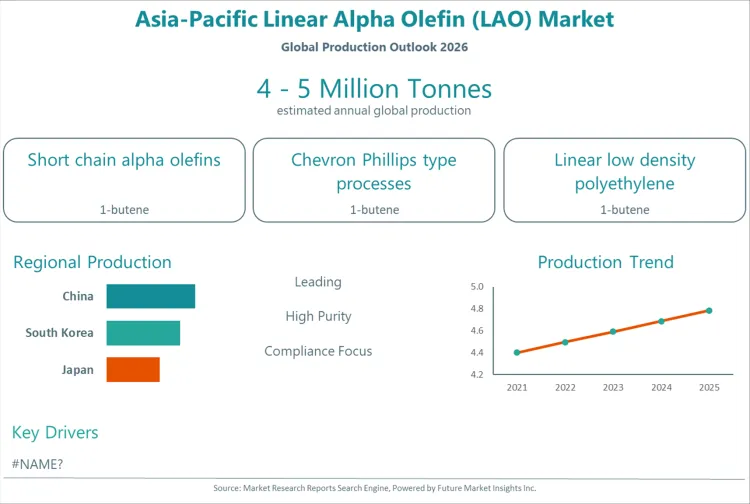
    Asia-Pacific linear alpha olefin production capacity in 2026 is estimated at approximately 4 to 5 million tonnes, reflecting a combination of integrated petrochemical complexes and selective specialty production. Capacity additions have been gradual, constrained by high capital intensity and dependence on competitive ethylene sourcing. China leads recent expansions through integrated refinery and steam cracker assets, while Northeast Asian producers prioritise operational stability and product slate optimisation.

    Pricing conditions are closely linked to ethylene costs, operating rates, and the balance between short chain and long chain alpha olefin cuts. Tight ethylene availability or high cracker feedstock costs quickly translate into higher LAO production costs. Value stability is stronger for specialty cuts due to qualification requirements and limited supplier availability.

    Production concentration is highest in China, followed by South Korea and Japan. Southeast Asia remains largely import dependent due to limited on purpose oligomerisation capacity, while Australia participates primarily as a downstream consumer rather than a producer.
    Asia Pacific Linear Alpha Olefin Lao Market

    Key Questions Answered

    • How sensitive is LAO production to ethylene availability?
    • How do operating rates influence pricing behaviour?
    • How concentrated is capacity across AsiaPacific?
    • How exposed is supply to feedstock cost volatility?

    Linear Alpha Olefin Product Cuts That Define Actual Use

    Product Classification

    • Short chain alpha olefins
    • 1butene
    • 1hexene
    • 1octene
    • Medium chain alpha olefins
      • 1decene
      • 1dodecene
    • Long chain alpha olefins
      • Detergent alcohol feedstocks
      • Lubricant intermediates
      • Specialty chemical inputs

    Short chain cuts account for the majority of regional volumes due to use as comonomers in polyethylene production. Medium and long chain cuts represent smaller volumes but higher value due to detergent, lubricant, and specialty chemical applications that require tighter specifications.

    Key Questions Answered

    • How do polyethylene comonomer needs affect cut allocation?
    • How do specialty applications influence product value?
    • How strict are purity requirements by cut length?
    • How do buyers manage supply continuity across cuts?

    Linear Alpha Olefin Production Routes That Shape Cost and Control

    Process Classification

    • Ethylene oligomerisation technologies
      • Chevron Phillips type processes
      • Shell higher olefin process
      • Advanced proprietary systems
    • Integrated cracker to LAO units
      • Improved feedstock security
      • Reduced logistics exposure
      • Higher operating stability
    • Flexible cut distribution systems
      • Product slate optimisation
      • Demand driven allocation
      • Margin management capability
    • Downstream separation and purification
      • Distillation intensity
      • Energy consumption sensitivity
      • Quality differentiation

    Integrated oligomerisation units offer the strongest cost and supply control through ethylene access and logistics efficiency. Non integrated producers face greater exposure to ethylene pricing volatility. Buyers value producers with flexible cut management and consistent quality control.

    Key Questions Answered

    • How viable are LAO investments under regional energy costs?
    • How flexible are producers in shifting cut distribution?
    • How does separation efficiency affect unit economics?
    • How does integration improve supply reliability?

    Linear Alpha Olefin End Use Distribution Across Asia-Pacific

    End Use Segmentation

    • Polyethylene production
      • Linear low density polyethylene
      • High density polyethylene
      • Performance polymer grades
    • Detergents and surfactants
      • Linear alkylbenzene feedstocks
      • Household and industrial cleaners
      • Specialty surfactant systems
    • Lubricants and fluids
      • Synthetic base oils
      • Drilling fluids
      • Industrial lubricants
    • Specialty chemicals
      • Plasticisers
      • Adhesives
      • Functional intermediates

    Polyethylene comonomer use remains the primary demand anchor due to scale and continuity. Detergents and lubricants provide diversification and higher value exposure, while specialty chemical uses require tighter quality control and closer supplier relationships.

    Key Questions Answered

    • How do polymer production cycles affect LAO demand?
    • How stable is detergent related consumption?
    • How do lubricant applications influence cut selection?
    • How do specialty uses manage qualification risk?

    Asia-Pacific Regional Production Assessment

    China

    China leads regional capacity through integrated petrochemical complexes aligned with polyethylene production and domestic consumption growth.

    South Korea

    South Korea operates technologically advanced units with a focus on reliability and export oriented supply.

    Japan

    Japan maintains selective capacity oriented toward high specification cuts and specialty applications.

    Southeast Asia

    Southeast Asia remains largely dependent on imports despite growing polyethylene and detergent demand.

    Australia

    Australia participates mainly as a downstream consumer with limited domestic LAO production.

    Key Questions Answered

    • How does integration level vary by country?
    • How do export flows balance regional imbalances?
    • How does downstream manufacturing concentration shape output?
    • How do logistics costs influence delivered pricing?

    Linear Alpha Olefin Supply Chain, Cost Structure, and Trade Flows

    The LAO supply chain begins with ethylene sourcing followed by oligomerisation, separation into defined cuts, storage, and distribution to polymer producers and chemical users. Limited storage flexibility increases sensitivity to operating disruptions.

    Primary cost drivers include ethylene pricing, energy consumption, separation efficiency, and plant utilisation. Trade flows within Asia-Pacific are active due to uneven geographic distribution of production and consumption. Specialty cuts tend to remain closer to production sites due to qualification and logistics constraints.

    Key Questions Answered

    • How do ethylene costs translate into LAO pricing?
    • How do storage limitations affect supply continuity?
    • How do specialty cuts influence trade exposure?
    • How do buyers benchmark regional versus imported material?

    Linear Alpha Olefin Ecosystem View and Strategic Considerations

    The Asia-Pacific LAO ecosystem includes steam cracker operators, oligomerisation technology licensors, polymer producers, detergent manufacturers, lubricant formulators, and logistics providers. Integration across crackers and downstream polymer assets supports operating efficiency and value stability.

    Strategic considerations include securing competitive ethylene supply, maintaining flexibility across product cuts, managing capital intensity, and aligning capacity utilisation with polyethylene and detergent demand cycles.

    Deeper Questions Decision Makers Should Ask

    • How secure is long term ethylene access?
    • How differentiated is the product cut portfolio?
    • How resilient are margins during feedstock volatility?
    • How flexible are plants across demand shifts?
    • How defensible are long term customer relationships?
    • How scalable are separation and purification assets?

    Bibliography

    • Encyclopedia of Polymer Science and Technology. (2024). Alpha olefins as comonomers and chemical intermediates. Wiley.
    • Perry, R. H., & Green, D. W. (2024). Perry’s chemical engineers’ handbook (9th ed.). McGraw-Hill.
    • Towler, G., & Sinnott, R. (2024). Chemical engineering design: Principles, practice, and economics of plant and process design (3rd ed.). Elsevier.

    Frequently Asked Questions

    What is the estimated Asia-Pacific LAO production capacity in 2026?

    Asia-Pacific linear alpha olefin production capacity in 2026 is estimated at approximately 4 to 5 million tonnes.

    What factors most strongly influence LAO pricing?

    Key influences include ethylene availability, energy costs, operating rates, and the balance between short and long chain product cuts.

    Why is production concentrated in a limited number of countries?

    High capital requirements, technology access, and the need for integrated ethylene supply limit the number of viable production locations.

    How do buyers choose between suppliers?

    Buyers evaluate cut consistency, purity specifications, supply reliability, logistics reach, and long term partnership stability.

    Key Questions Answered in the Report

    Supply chain and operations

    • How secure is ethylene sourcing?
    • How flexible are oligomerisation units?
    • How sufficient is buffer inventory?
    • How resilient are logistics routes?
    • How quickly can output adjust to demand shifts?
    • How effective are maintenance practices?
    • How robust are safety systems?
    • How exposed are operations to feedstock disruption?

    Procurement and feedstocks

    • How are ethylene contracts structured?
    • How volatile are energy costs?
    • How diversified are suppliers?
    • How do buyers manage price pass through?
    • How are quality specifications verified?
    • How do sourcing strategies differ by country?
    • How are long term agreements negotiated?
    • How do buyers manage supply concentration risk?

    Technology and process improvement

    • How efficient are oligomerisation catalysts?
    • How flexible is cut distribution control?
    • How is energy usage optimised?
    • How is digital monitoring applied?
    • How are emissions controlled?
    • How does separation efficiency improve value?
    • How are new cuts qualified?
    • How do partnerships support technology upgrades?

    Buyer, channel, and who buys what

    • Which sectors anchor baseline demand?
    • How do polymer producers plan comonomer use?
    • How do detergent formulators manage continuity?
    • What volumes define long term agreements?
    • How do buyers assess supplier reliability?
    • How do channels differ by country?
    • How do buyers verify quality consistency?
    • How do users manage substitution risk?

    Pricing, contract, and commercial structure

    • What benchmarks guide LAO pricing?
    • How often are prices reviewed?
    • How are feedstock and energy changes passed through?
    • How do contracts differ by product cut?
    • How long are supply commitments?
    • How are disputes resolved?
    • How are logistics costs allocated?
    • How do suppliers protect margins?

    Plant assessment and footprint

    • Which locations offer integrated ethylene access?
    • What defines efficient oligomerisation scale?
    • How do energy costs affect operations?
    • How do environmental rules shape output?
    • How available is skilled labour?
    • How modern are separation assets?
    • How adaptable are plants to new cut requirements?
    • How suitable are sites for expansion?

    Explore Hydrocarbons, Petrochemicals, and Organic Chemicals Insights

    View Reports

    Trusted By
    Market Research Reports Search Engine

    Asia-Pacific Linear Alpha Olefin (LAO) Production Capacity and Growth Outlook