Lactic Acid Price and Production Outlook
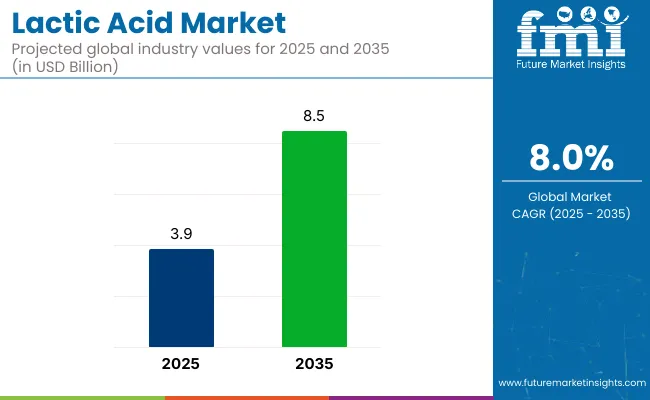
Global lactic acid production in 2025 is estimated at approximately 1.55 to 2.6 million tonnes, reflecting a well-established but structurally expanding bio-based chemicals market. Supply growth is driven by rising demand from food preservation, pharmaceuticals and personal care, alongside accelerating consumption in biodegradable plastics, particularly polylactic acid (PLA). Market conditions balance mature fermentation capacity with increasing feedstock competition, energy costs and capital investment requirements for large-scale biopolymer integration. The global picture shows steady year-on-year capacity growth influenced by sustainability mandates, packaging regulations and bio-based material substitution trends.
Production leadership remains concentrated in regions with access to carbohydrate feedstocks, fermentation expertise and downstream polymer processing infrastructure. Asia Pacific leads global production supported by corn- and sugar-based fermentation capacity. North America maintains significant capacity tied to PLA resin integration. Europe focuses on food, pharmaceutical and specialty grades under stringent quality standards. Several regions remain import dependent due to feedstock limitations and higher production costs.
Industrial, consumer and sustainability-driven applications continue to support baseline demand growth. Buyers value consistent optical purity, fermentation reliability and long-term supply continuity.
Key Questions Answered
- How sensitive is lactic acid production to feedstock price volatility?
- How does PLA demand influence overall lactic acid capacity planning?
- How do energy and fermentation yields affect production economics?
- How do regulatory trends shape longterm demand visibility?
Lactic Acid: Product Families that Define How Buyers Actually Use It
Product Classification
- Food grade lactic acid
- Preservatives and acidity regulators
- Dairy and beverage processing
- Meat and bakery applications
- Pharmaceutical and personal care grade
- Drug formulations
- Topical and cosmetic products
- Medical solutions
- Industrial grade lactic acid
- Chemical intermediates
- Cleaning formulations
- Textile and leather processing
- Polymer and bioplastics grade
- Polylactic acid (PLA) production
- Biodegradable packaging
- Fibres and films
Food and polymer grades dominate volume demand, while pharmaceutical and specialty grades drive margin differentiation. Buyers prioritise purity, optical isomer control and regulatory compliance.
Key Questions Answered
- How do purity requirements differ across enduse sectors?
- How important is optical isomer control for polymer applications?
- How do buyers manage qualification timelines for new suppliers?
- How does enduse regulation affect grade selection?
Lactic Acid: Process Routes That Define Cost, Speed and Customer Focus
Process Classification
- Carbohydrate fermentation routes
- Cornbased fermentation
- Sugar and molasses fermentation
- Yield optimisation
- Downstream purification and concentration
- Filtration and separation
- Optical isomer refinement
- Product stabilisation
- Integrated lactic acid to PLA systems
- Onsite polymerisation
- Reduced logistics cost
- Supply chain integration
- Alternative feedstock development
- Biomass and waste sugars
- Secondgeneration fermentation
- Earlystage deployment
Fermentation-based production dominates due to scalability and cost efficiency. Integration with PLA production improves economics and demand stability.
Key Questions Answered
- How do feedstock choices influence unit costs?
- How scalable are fermentation and purification systems?
- How does integration reduce supply chain risk?
- How quickly can producers adjust output grades?
Lactic Acid: End Use Spread Across Key Sectors
End Use Segmentation
- Food and beverage
- Preservation and shelflife extension
- Flavor enhancement
- pH control
- Pharmaceuticals and healthcare
- Drug formulations
- Medical solutions
- Topical products
- Personal care and cosmetics
- Skincare formulations
- pH regulation
- Exfoliation agents
- Bioplastics and polymers
- PLA packaging
- Disposable products
- Fibres and films
Bioplastics represent the fastest-growing demand segment, while food and pharmaceutical uses provide stable baseline consumption.
Key Questions Answered
- How does packaging regulation accelerate PLA demand?
- How resilient is foodgrade demand during economic cycles?
- How do buyers evaluate sustainability claims?
- How diversified is demand across applications?
Lactic Acid: Regional Potential Assessment
Asia Pacific
Asia Pacific leads global capacity driven by feedstock availability, large-scale fermentation facilities and growing bioplastics demand.
North America
North America maintains strong production tied to PLA resin integration and food-grade consumption.
Europe
Europe focuses on high-purity, pharmaceutical and specialty grades under strict regulatory frameworks.
Latin America
Latin America shows emerging potential due to sugar-based feedstocks but remains capacity constrained.
Middle East and Africa
These regions remain largely import dependent with limited local fermentation infrastructure.
Key Questions Answered
- How does feedstock availability shape regional competitiveness?
- How do regulations influence capacity investment decisions?
- How secure are importdependent supply chains?
- How do logistics costs affect regional pricing?
Lactic Acid Supply Chain, Cost Drivers and Trade Patterns
Lactic acid supply begins with agricultural feedstocks followed by fermentation, purification, concentration and distribution in liquid form or captive polymer conversion. Downstream buyers include food processors, pharmaceutical companies, personal care brands and polymer producers.
Key cost drivers include feedstock pricing, energy consumption, fermentation yields and purification efficiency. Trade patterns are increasingly regionalised due to transport costs and integration with downstream PLA plants.
Key Questions Answered
- How does feedstock pricing influence margin stability?
- How do buyers manage longterm supply contracts?
- How does integration affect trade flows?
- How do producers benchmark delivered cost?
Lactic Acid: Ecosystem View and Strategic Themes
The lactic acid ecosystem includes agricultural suppliers, fermentation specialists, chemical processors, polymer producers, food and pharmaceutical companies and regulators. Sustainability, traceability and capacity integration define strategic positioning.
Deeper Questions Decision Makers Should Ask
- How secure are longterm feedstock supplies?
- How exposed is capacity to agricultural volatility?
- How bankable are PLAlinked demand forecasts?
- How resilient are operations to regulatory shifts?
- How scalable are existing fermentation assets?
- How quickly are biobased alternatives gaining share?
- How robust are certification and sustainability claims?
- How aligned are stakeholders across the value chain?
Bibliography
- Ullmann’s Encyclopedia of Industrial Chemistry. (2024). Lactic acid and fermentation-based chemicals. Wiley-VCH.
- Food and Agriculture Organization. (2024). Industrial fermentation and bio-based chemicals. FAO.